Posts

Showing posts with the label Bond yields

Mr. Bond no longer a superstar
Image
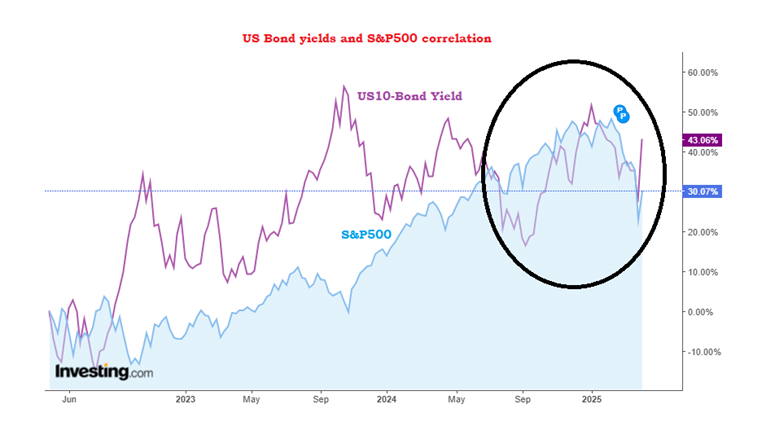
The conventional market wisdom suggests that the bonds usually lead the change in market cycles. Traditionally traders have closely followed the yield curve shape, benchmark (10 year) yields and high yield credit spreads to speculate the near term moves in equity, currency and commodity markets. Two simple reasons for this traditional practice are – (i)     Bond markets are usually more correlated with the economy. (ii)    Size of bond markets is materially larger than the equity, currency and commodity markets. It has the largest number of leveraged positions at any given point in time; and most of the large and influential market participants are more active in bond markets as compared to the other markets. I am however inclined to disregard this piece of conventional wisdom. In my view, it would make sense only if the markets are operating in a free and fair manner. In cases where the central bankers and governments (through Sovereign Wealth Funds and o...

State of the economy

The Reserve Bank of India (RBI) has issued its latest assessment of the state of the economy . The paper notes the marked slowdown in the global economy; it exudes confidence in the sustainability of 6.7%-7% GDP growth in India. In particular, the assessment sounds buoyant on manufacturing, and household consumption, while taking cognizance of resilience in the services sector. The inflation is forecasted to stay close to the lower bound of the RBI tolerance limit (4-6%). Global economy slowing The RBI paper highlights some areas of concern for the global economy. In RBI’s assessment global growth has lost some speed in the first half of 2024 relative to the preceding semester, and momentum has slackened further in the third quarter. The paper notes, “All around, indicators point increasingly to slowing global economic activity, more so on the eastern shores of the Atlantic, which vindicated the ECB’s September rate cut to secure a soft landing. In the US, the now famous remark –...

1HFY24 – So far so good

Image
The first of the current financial year progressed on the predicted lines. There were no remarkable surprises either in the global macroeconomic developments or market performance. The focus of market participants and policymakers remained mostly on the macroeconomic parameters. Economic growth and trade moderated worldwide with a few exceptions like India. Inflation remained elevated but under control. Monetary policy continued to tighten resulting in higher bond yields, tighter liquidity, and rising cost of capital. Geopolitical conditions remained mostly unchanged. Commodity prices moved in tandem with the macroeconomic, geopolitical, and environmental conditions. Clouded growth outlook led the industrial metals down; higher bond yields and stronger USD weighed the precious metals lower, depleted strategic reserves and larger output cut by OPEC+ led the energy prices higher, and better crop and improvement in shipments from war zones led the agri produce prices lower. Chinese eq...

Mr. Bond not showing any signs of weakness

Image
  While equity markets do enjoy better attention of investors, it is the bond market that usually guides the direction of financial markets, including equity and currency markets. The following recent signals from the bond market are worth noting: US Junk Bond Yields fall below inflation Investment demand for speculative-grade debt and high-yield bond exchange traded funds has been so high that yields on the riskiest U.S. companies are now below that of inflation. The rally in corporate debt rated below investment grade has also pushed yields down to record lows around 4.54%, compared to consumer prices that rose 5% in May year-over-year. The head of equity research at Julius Bär, summarized the situation as “Inflation has risen to record-high levels in recent months, and the 10-year US bond yield has fallen to a fresh five-month low. What is the reason for the rally in US Treasuries? Obviously, investors believe that peak growth and peak expectations are already behind us. T...

FY21 in retrospect

Image
After FY09, the current financial year (FY21) has been the most eventful year in most respects – social, economic, financial, ecological, science, and geopolitical. Socio-economic disaster: The spread of SARS-CoV-2 (Covid-19) virus that started sometime in last quarter of 2019 was declared a global pandemic in March 2020. The pandemic engulfed the entire world in no time, causing tremendous loss to human life and global economy. The mobility of people was restricted in most countries substantially. The economic activities were also curtailed only to the “essential” activities. Consequently, the global economy faced a technical global recession as most major economies recorded negative growth during 1HFY21. The pandemic this had disastrous socio-economic consequences. Millions of jobs were lost and workers displaced; smaller businesses which could not bear the cost of lockdown faced closure or were further scaled down; loss of lives traumatized families; and millions of poor children w...